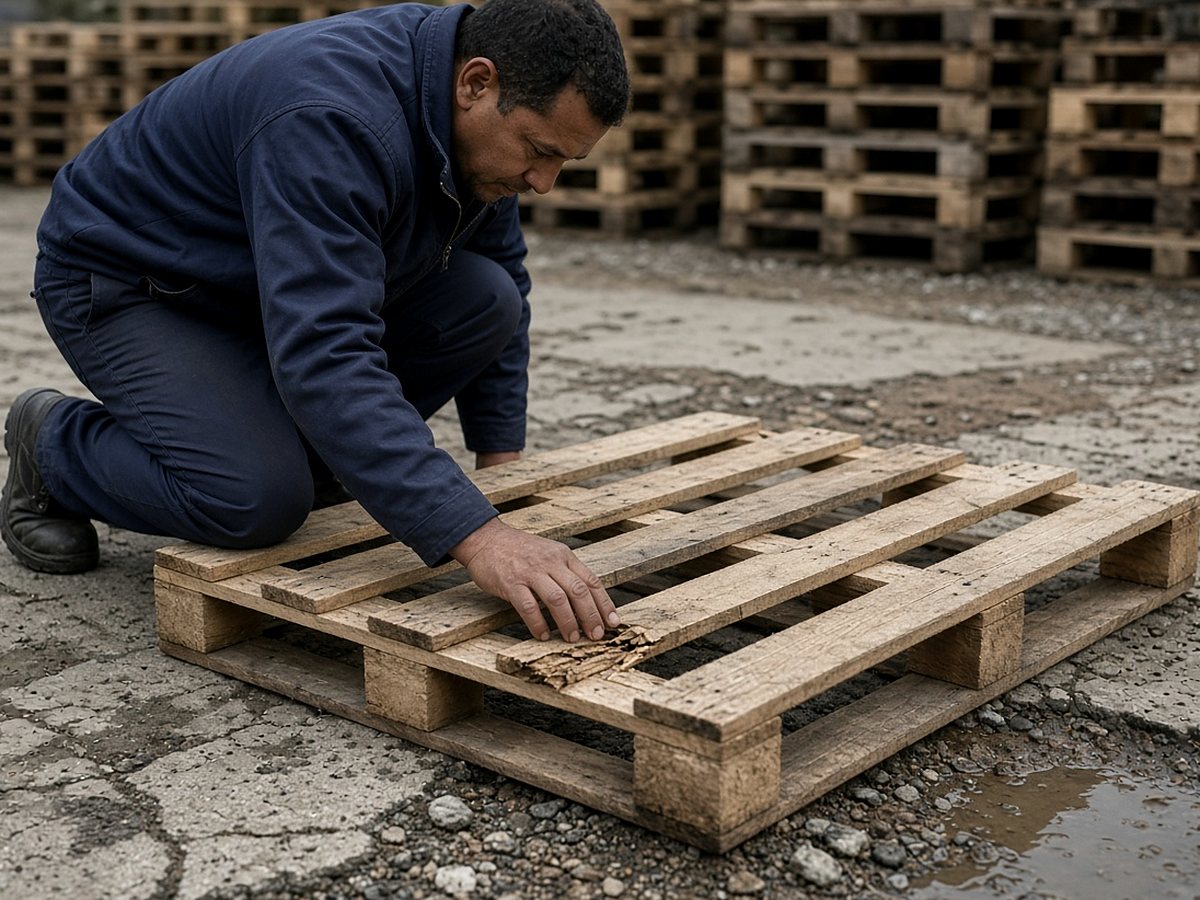
How Substrate Check starts on timber pallet boards
Substrate Check starts with the pallet base before any load goes on. Split boards, raised nails and uneven runners can turn an ordinary dispatch into a forklift spill before the shift is done.
Start with the surface under the pallet and the route the forklift will take. Rain at coastal sites, loose stone in open yards, worn concrete in Gauteng depots and damp storage corners in Cape Town all change how runners sit under weight. Those details matter before any repair ticket is opened.
A wide yard shot taken before unloading shows more than pallet counts. Potholes, standing water, loose stone and broken dock edges often explain repeated board cracks and runner damage. Keep that image with the dispatch record so the loading area can be checked against later breakages.
What this inspection highlights
The check points to the surface faults most likely to break runners, catch boards or tip a loaded pallet when a forkie enters at speed. It gives the site team a short list to inspect again on the next shift, especially where the same bay keeps producing damaged timber.
Read Substrate Check with the related yard and logistics entries when damage is happening across more than one loading point. Check pallet counts, board condition and the travel route before the vehicle departs. Pallet orders are priced on size, quantity and load weight, together with the address where the stack will be off-loaded.
- Surface issues matched to pallet damage
- Base condition captured before first lift
- Inspection note shared by email
Warehouse and yard conditions in SA
The same pallet behaves differently at OR Tambo freight sites, Sunnyrock warehousing and Crown Mines industrial yards. Dock levellers, cracked aprons, rain run-off and tight turning space all change how the base takes strain before linehaul collections. Separate urgent collection pressure from the weekly site pattern when you log the problem.
Durban moisture lifts timber movement and rusts exposed fasteners faster than many inland sites. Highveld dust can hide nail heads, while generator traffic and after-hours loading during power cuts increase rough handling around stacks. A proper site check should tie the damage back to ground conditions, not guesswork.
Operated by Astros Marketing (Pty) Ltd from 2 Makro Place, Sunnyrock 1401.
Notes to gather on site
Check the pallet base before loading. Split boards, proud nails and uneven runners are what turn a clean dispatch into a forkie spill by tea time.
Record the substrate findings while the marks are still visible. A same-day note with photos, bay location and pallet condition is easier to match to stock sheets when the buyer or warehouse lead asks where the damage started.