How First Photo records pallet repair work
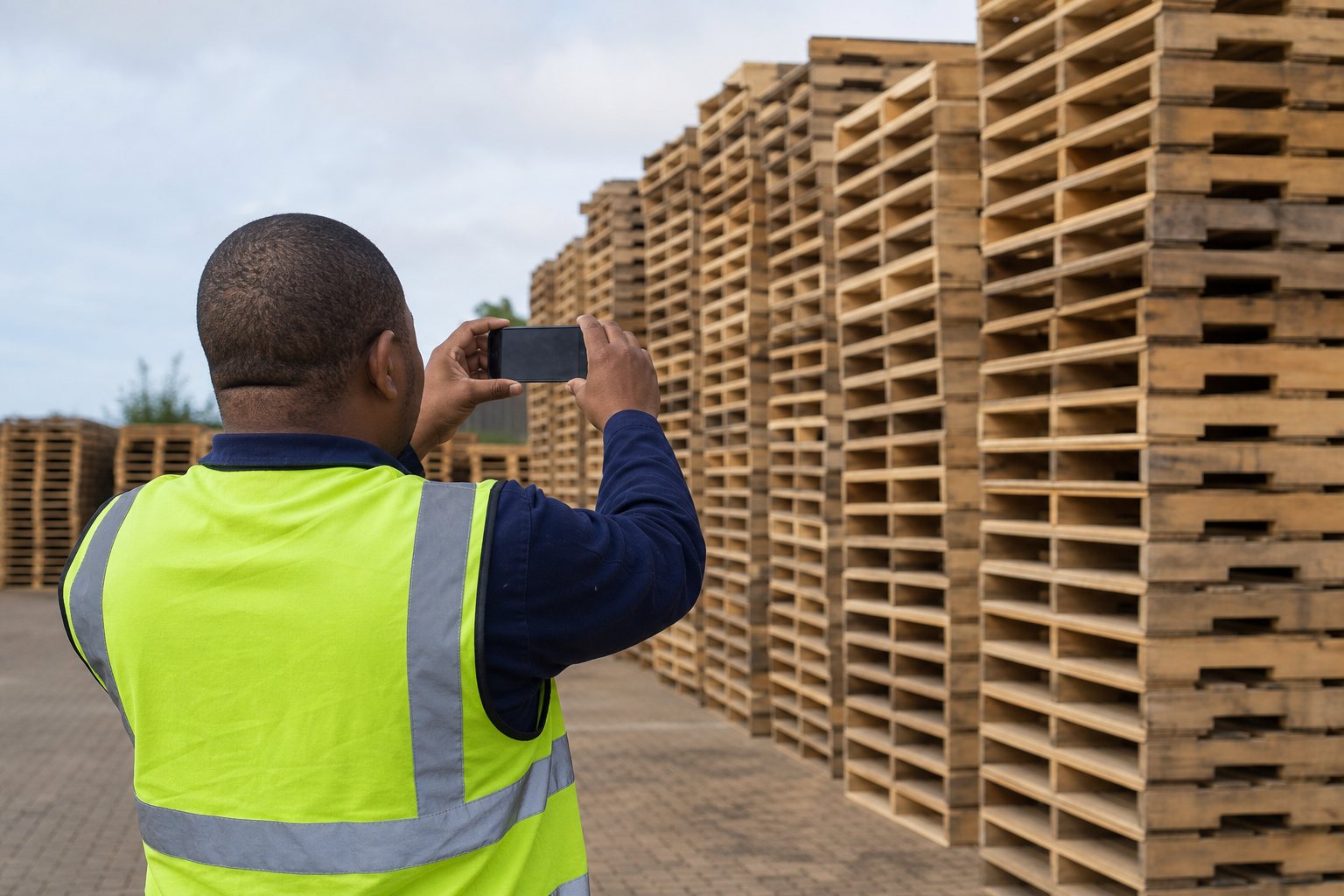
The first photo on a pallet brief should show what the yard team will actually find on site. Photograph the stack, the bay and any damage so supply or repair decisions start from the real floor condition.
Begin with the pallet size, stack pattern and what the camera must prove. In Johannesburg dust, Durban moisture and Cape Town wind at open loading points, photos can hide cracks, damp boards and unstable corners if taken too close. A useful first image gives the depot, buyer and driver the same starting view.
Take the bay shot before the load is broken down or reworked. Once forklift handling starts, it becomes harder to tell whether missing units, crushed corners or mixed returns were there at handover or happened during sorting.
What the first shot settles
A good opening photo helps fix the count, confirms the stack arrangement and shows whether repair stock is mixed into usable pallets. That record matters more than a long message thread when dispatch, receiving and the yard need one version of events.
Keep First Photo linked to the matching yard or logistics note only after the image itself makes sense. Check quantity and visible condition once more before the truck pulls away. Tell us the site and add a clear picture of the bay so we can plan the drop.
- A count based on what was actually photographed
- Visible condition captured before handling starts
- Related reading: Pallets, Yards, and Logistics
- Image trail kept with the job record
SA site details that affect photos
Busy dispatch points around OR Tambo, Sunnyrock and Crown Mines often leave little space for retakes, so the first frame must do more than show a close-up board. Include enough background to identify the bay, the stack footprint and how the pallets were standing when handed over. On export or transfer work, that context can settle later disputes over count and condition.
Coastal air can darken timber and make damp damage harder to judge in poor light. Inland dust can mask splits, nail lift and worn deck boards unless the photo is taken from a slight angle. During power cuts or low-light loading, use a steady wide shot rather than a rushed near image that hides the stack.
Operated by Astros Marketing (Pty) Ltd from 2 Makro Place, Sunnyrock 1401.
First Photo capture points
First photo matters on a pallet brief. Show the stack, the bay, and the damage so the yard team sees the real floor condition.
File the photo with the stock sheet and site note while the bay details are still easy to verify. That record helps when a buyer needs proof of count, stack layout, or visible damage from the original pallet brief.