How Demo Day runs with repaired wooden pallets
A site demo helps before pallet work starts at a busy warehouse or yard. Check access, stack height, pallet condition and working space before supply, repair or collection begins.
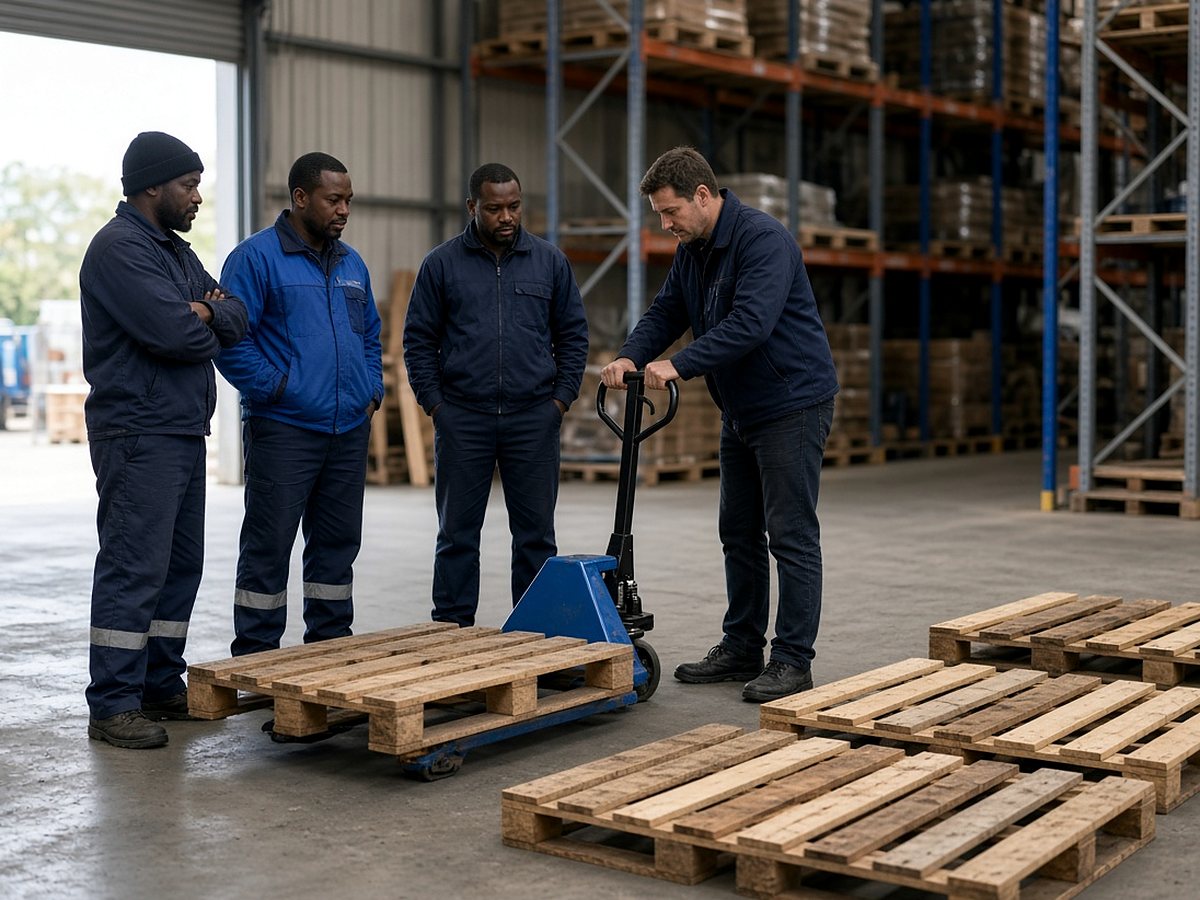
Demo Day starts with what is physically in front of the team: pallet type, stack layout and where damaged units are being held. Conditions differ between Johannesburg, Durban and Cape Town, especially where dust, moisture or tight dispatch windows affect storage and handling. Smaller depots also need checking properly because access and turning room often matter as much as pallet count.
The first look at the bay usually shows whether mixed grades have been piled together or whether repair stock is separate from usable stock. A short site note and a few marked photos help the warehouse team refer back to the same points once work begins. That cuts down confusion when forklifts, trucks and repair areas are sharing limited space.
What the site visit clarifies
A Demo Day visit should leave the warehouse with a usable record of what was seen and what needs attention before pallet work starts. This can include stack limits, damaged board patterns, safe laydown space and where collection vehicles can stand without blocking normal movement.
If Demo Day fits your site, send the location and the kind of pallet in use. Include any issue with access, repair sorting or stack condition so the visit can focus on the right area when Demo Day is discussed.
- Stack guidance based on actual bay space
- Condition record captured before any pallet handling
- Named site points recorded for follow-up
Site factors that affect the demo
A visit in Gauteng can involve busy industrial sites where trailer queues and dispatch cut-offs leave little room for trial and error. In places such as Sunnyrock, Crown Mines or near OR Tambo freight routes, yard access and waiting areas need checking before vehicles arrive. The point is to assess the working conditions on that site, not assume every warehouse handles pallets in the same way.
Moist coastal air can show up in timber condition, while inland dust often affects sorting areas and the way stacks are kept. Power cuts may also change when repairs, collections or counting can happen safely. Demo Day should account for those operating conditions before any pallet plan is set.
Operated by Astros Marketing (Pty) Ltd from 2 Makro Place, Sunnyrock 1401.
What to bring to the walk-through
A practical floor note on site demos for teams checking pallet condition, stack height and yard access before work starts.
File the Demo Day note while stack positions and damage points are still easy to verify. Keep it with the movement record and the damage summary when a buyer or warehouse lead asks for supporting detail.